
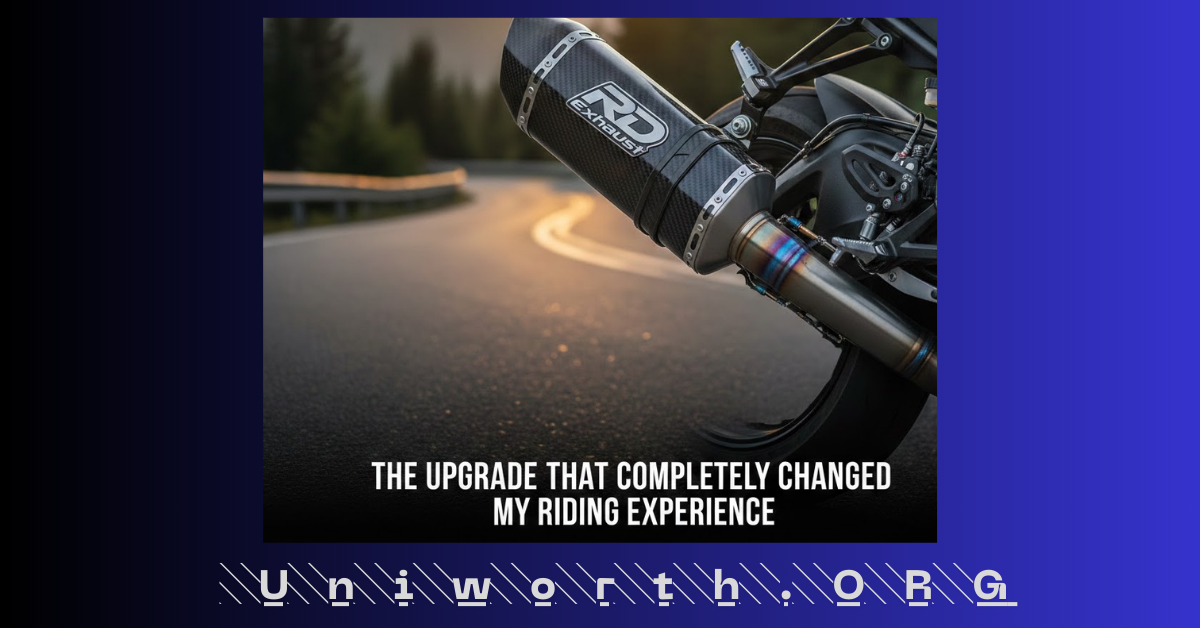
I still remember the first time I started my bike after installing a new RD exhaust. It was early Sunday morning. The street was quiet. I turned the key, hit the starter… and that deeper, sharper sound instantly gave me chills.
It wasn’t just louder.
It felt alive.
If you own an RD, you probably know what I mean. These bikes already have character. But once you upgrade the exhaust system, everything changes — the sound, the throttle response, even the way the bike feels under you.
Let me share my honest experience with upgrading my RD exhaust, what I learned (sometimes the hard way), and what I’d tell any friend thinking about doing the same.
Why an RD Exhaust Makes Such a Big Difference
Bikes like the Yamaha RD 135 and the Yamaha RD 350 are legendary for a reason. Their two-stroke engines are raw, responsive, and incredibly fun.
But here’s something many people don’t realize:
On a two-stroke engine, the exhaust isn’t just a pipe that pushes gases out. It’s actually part of the engine’s performance system.
When I swapped my stock exhaust for a performance expansion chamber, I noticed three immediate changes:
-
A sharper, more aggressive sound
-
Faster revving at higher RPMs
-
Smoother throttle response
And no, it wasn’t just in my head.
Understanding Two-Stroke Performance and Exhaust Design
If you’re riding a two-stroke RD, the exhaust plays a critical role in how the engine breathes.
Expansion chambers are designed to:
-
Improve scavenging
-
Enhance power delivery at specific RPM ranges
-
Help return part of the air-fuel mixture back into the cylinder
When I first learned this, it completely changed how I viewed exhaust upgrades. It’s not just about noise — it’s about tuning.
And trust me, tuning matters.
Types of RD Exhausts I’ve Tried
When I started researching, I was overwhelmed. There are so many options.
Here’s a quick breakdown based on my experience:
1. Stock Exhaust
-
Quiet and reliable
-
Factory-balanced performance
-
Ideal for restorations or originality
2. Aftermarket Sport Exhaust
-
Louder, deeper tone
-
Improved airflow
-
More aggressive look
3. Expansion Chamber (Performance Exhaust)
-
Designed for maximum two-stroke efficiency
-
Noticeable high-RPM power gain
-
Often requires carburetor adjustments
I first installed a basic sport exhaust. It sounded great, but performance gains were modest.
When I switched to a properly designed expansion chamber, that’s when I truly felt the difference. The bike pulled harder above 6,000 RPM and felt much more responsive.
My Personal Installation Experience
I thought it would be simple — remove the old exhaust, bolt on the new one, done.
Not quite.
Personal Tip #1: Always Check Your Carburetor After Installation
After installing the new RD exhaust, my bike started running lean at higher RPMs. It hesitated and felt unstable.
The fix? Carburetor tuning.
You may need to adjust:
-
Main jet size
-
Needle position
-
Air-fuel mixture
Ignoring this step can actually reduce performance instead of improving it.
Once I re-jetted properly, the bike felt completely transformed.
Does an RD Exhaust Really Increase Horsepower?
Short answer: Yes — but realistically.
Don’t expect a massive horsepower jump unless you’re running additional engine modifications. However, what you will notice is:
-
Better throttle response
-
Stronger pull in the power band
-
Faster engine revving
For me, the improvement wasn’t just about top speed. It was about how quickly and smoothly the bike reached its power zone.
That’s what made it exciting.
Let’s Talk About the Sound
Let’s be honest.
Half the reason we upgrade an RD exhaust is for the sound.
There’s something magical about that sharp, metallic two-stroke scream. It’s nostalgic. It’s mechanical. It turns heads.
I’ve literally stopped mid-conversation when I heard an RD with a tuned expansion chamber pass by.
Personal Tip #2: Think About Daily Riding
My first performance exhaust was extremely loud. It sounded incredible on open roads.
But in city traffic? It got tiring.
Now, I prefer a slightly moderated setup — still aggressive, but manageable for everyday riding.
Trust me, your ears will thank you.
Legal Considerations You Shouldn’t Ignore
This part isn’t as fun, but it’s important.
Depending on where you live, excessively loud exhaust systems can lead to fines or inspections.
Before upgrading your RD exhaust, check:
-
Local noise regulations
-
Emission requirements
-
Inspection standards
I once had to install a removable silencer just to stay compliant. It saved me from unnecessary trouble.
Common Mistakes I Made (So You Don’t Have To)
I definitely learned some lessons along the way.
Buying Based on Price Alone
The cheapest exhaust I bought cracked within months. Poor welding and weak mounting points caused vibration damage.
Skipping Carb Adjustments
Big mistake. Performance suffered until I corrected it.
Ignoring Mounting Quality
RD bikes vibrate. A poorly mounted exhaust won’t last.
Always check weld quality, bracket strength, and proper alignment.
RD Exhaust and Engine Modifications
If your bike already has modifications like:
-
Ported cylinder
-
Higher compression
-
Performance piston
Then choosing the right exhaust becomes even more critical.
An improperly matched exhaust can make your power delivery uneven — strong at high RPM but weak at low speeds.
I experienced this after minor engine tuning without changing the exhaust. The bike felt unbalanced.
Once I upgraded the exhaust to match the setup, everything came together.
Two-stroke tuning works best when the entire system is aligned.
Maintenance Matters More Than You Think
Here’s something most people overlook.
Two-stroke exhaust systems accumulate oil residue over time. Expansion chambers especially can build up carbon and unburned oil.
What I regularly check:
-
Rust spots
-
Mounting bolts
-
Exhaust flange seals
-
Internal oil buildup
Preventative maintenance keeps performance consistent and avoids unnecessary repairs.
How the RD Exhaust Changed My Riding Experience
It might sound dramatic, but upgrading my RD exhaust made me reconnect with my bike.
It felt sharper.
More responsive.
More personal.
I paid more attention to RPM shifts. I listened to the engine differently. I rode with more intention.
It wasn’t just an upgrade. It was a transformation in how the bike felt and how I interacted with it.
Final Thoughts: Is an RD Exhaust Worth It?
If you care about:
-
Performance
-
Sound
-
Personalization
-
Classic two-stroke character
Then yes, upgrading your RD exhaust is absolutely worth considering. Just do it properly.





Leave a Reply