
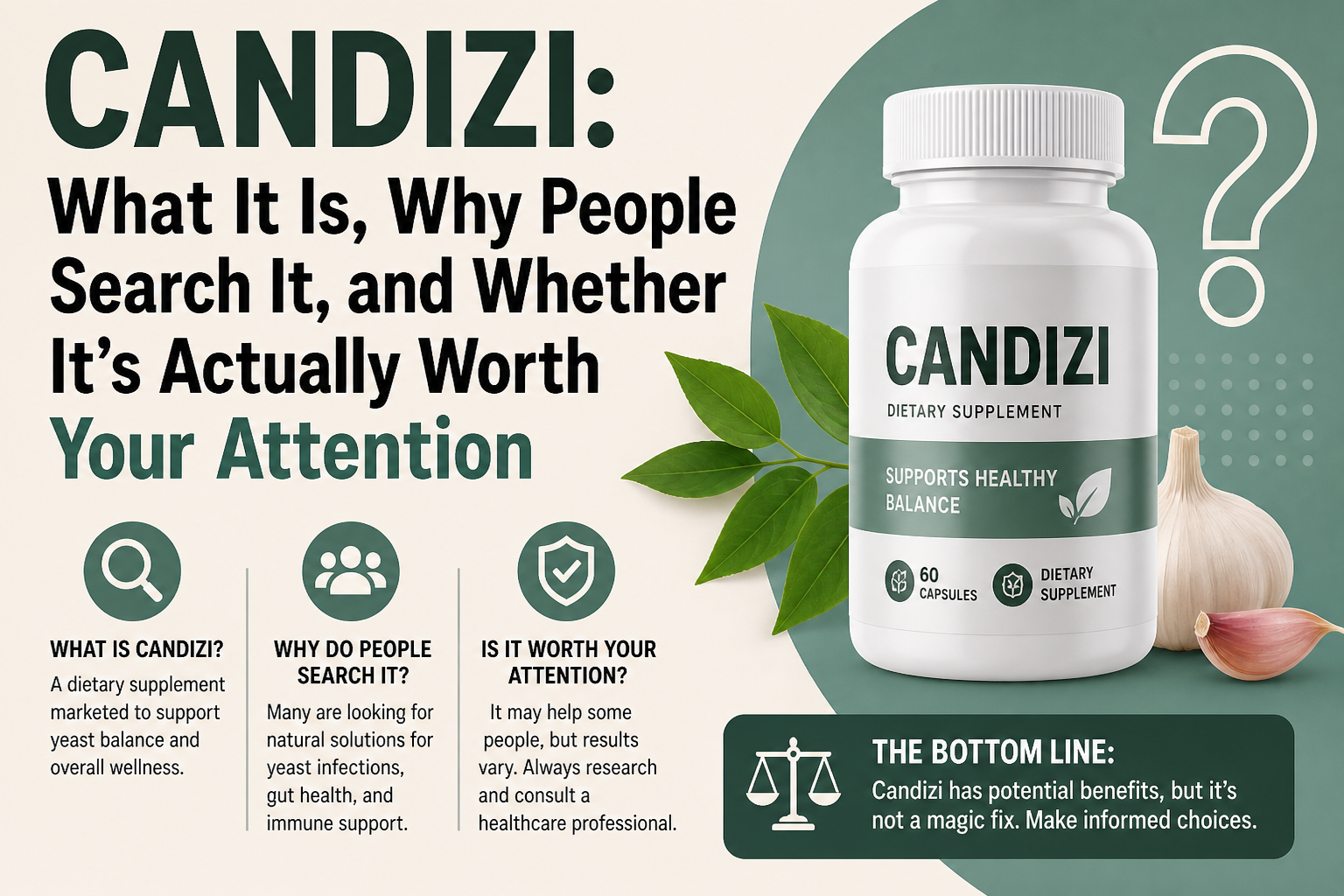
Most people searching for Candizi are trying to solve a simple problem: they came across the name somewhere online, but nothing around it explained what it actually was.
That is the real reason this keyword gets searched.
People usually find Candizi in a search result, a social post, a product mention, or a website and immediately want to know three things:
- what it is
- whether it is legitimate
- whether it is worth paying attention to
That is the real search intent, and it is where most articles fall short.
Candizi does not appear to be a widely recognized mainstream name, which means it should not be treated like an established brand just because it looks polished online. The smarter approach is simple: figure out what it actually offers, check whether it is credible, and decide whether it has any practical value before giving it your time.
The Real Problem
The problem with Candizi is not that it is hard to define.
The problem is that people usually encounter it before anyone explains it properly.
That is what creates the search.
Most users are not actively looking for Candizi. They are trying to verify it.
That is an important difference.
They have usually already seen the name somewhere else, and the source that mentioned it did not do enough to answer basic questions. So they search it themselves.
That usually means one of four things happened:
- the name appeared in search, but the result was vague
- it showed up in social content without context
- it was attached to a product, service, or link with little explanation
- the branding looked polished, but the purpose was unclear
That is the real friction. Candizi is not difficult because it is complex. It is difficult because it arrives without context.
And when something online wants attention before it earns clarity, users are right to be cautious.
Detailed Explanation
Candizi looks like the kind of digital-first name that appears polished before it becomes trustworthy.
That is increasingly common online.
A name gets launched, branded well, and pushed into search or social channels before most people can tell what it actually does. It may be real. It may even be useful. But users still have to do the work the branding should have done for them.
That is where Candizi sits.
The issue is not whether it exists. It probably does.
The issue is whether it gives users enough reason to trust it.
That is the better question, and it is the one most weak articles avoid.
When people search a term like Candizi, they are usually not looking for a dictionary definition. They are running a credibility check.
They want to know:
- Is this a real thing?
- Is it useful?
- Is it safe?
- Is there any reason to trust it?
That is what this article should answer.
What People Are Actually Trying to Find Out
When users search Candizi, they are usually trying to answer one practical question: should I keep going with this, or close the tab?
That may sound blunt, but it is usually true.
Most people are not researching Candizi out of interest. They are trying to decide whether it deserves more attention.
That makes this less of an information search and more of a judgment search.
People are trying to quickly assess:
- what Candizi actually does
- whether it solves a real problem
- whether real people use it
- whether it asks for too much too early
- whether it feels credible once you look past the design
That is the real user need.
Why So Many Articles Miss the Point
Most weak pages make the same mistake: they describe Candizi like it is already established.
That is not helpful.
Users do not need a polished summary of what Candizi claims to be. They need help deciding whether those claims mean anything.
That is the difference between useful content and recycled content.
Most top-ranking pages tend to:
- repeat vague language
- assume legitimacy too early
- describe branding instead of value
- avoid direct judgment
- skip trust checks entirely
That leaves readers exactly where they started: still unsure what to do next.
What Actually Matters Here
When a name like Candizi shows up without context, users do not need more branding language. They need better filters.
These are the only questions that really matter.
1. Can Candizi explain itself clearly?
You should be able to understand what it is in under 30 seconds.
Not the slogan. Not the aesthetic. The actual function.
If you still cannot explain what Candizi does after scanning its homepage or mention, that is the first warning sign.
Clear products explain themselves quickly.
Confusing ones make users do the work.
2. Is there a real person or company behind it?
This matters more than design.
A trustworthy digital product usually makes it easy to find:
- who runs it
- where it operates
- how to contact support
- what the policies are
- what happens if something goes wrong
If Candizi looks polished but hides accountability, trust should drop fast.
3. Is there proof real people use it?
This is where weak digital brands usually break down.
Look beyond its own website.
Can you find:
- real user mentions
- independent reviews
- natural discussion
- complaints that sound real
- screenshots from actual users
- signs people have used it outside its own marketing
A real product leaves evidence behind it.
If Candizi has visibility but no independent footprint, that matters.
4. Does it offer anything useful?
This is where many vague digital brands fail.
Even if Candizi is real, that does not make it useful.
Can it save time?
Solve a problem?
Make something easier?
Offer something clearer, cheaper, or faster?
If the answer is still vague after a few minutes, the value probably is too.
Real Examples / Use Cases
You found Candizi in search
This is the most common entry point.
Usually this means the name is getting visibility before it is getting explanation.
That alone is not a red flag, but it is a reason to stay alert.
Your first test is simple: can you figure out what it does without digging?
If not, that is useful information.
You saw Candizi on social media
This is where people often trust presentation too quickly.
A clean visual identity can make almost anything feel established.
That does not mean it is.
The fastest way to avoid being misled is to ignore how polished it looks and focus on what it actually explains.
It asked you to sign up
This is the moment to stop and evaluate.
No unfamiliar platform should ask for your email, payment details, or access permissions before clearly proving what it does and why it is worth using.
If Candizi asks for commitment before clarity, that is the signal that matters most.
You are thinking about buying something linked to it
This is where caution matters most.
Before spending anything, check:
- who processes payment
- whether refunds are explained clearly
- whether support is reachable
- whether product details are specific
- whether real buyers seem to exist
A surprising number of weak digital brands fall apart at this stage.
Common Mistakes
The biggest mistake people make with names like Candizi is trusting the presentation too early.
That usually shows up in predictable ways:
- assuming clean design means credibility
- mistaking visibility for trust
- ignoring missing ownership details
- signing up before understanding the offer
- treating branding as proof
This is how people end up wasting time on polished but low-value platforms.
Comparison / Better Alternative
Candizi should be judged against one simple standard:
Would this still feel credible if the design were stripped away?
That question cuts through most of the noise.
The better alternative is rarely the platform with the best branding. It is usually the one that explains itself clearly, proves who is behind it, and gives users enough information to make a confident decision without guesswork.
That is the standard Candizi should be held to.
Actionable Solution
If you are trying to judge Candizi properly, use this filter:
- Explain what it does in one sentence
- Find out who runs it
- Check whether real users mention it elsewhere
- Review contact, privacy, and refund details
- Confirm the value before signing up
- Avoid giving payment or personal details too early
- Compare it with something clearer and more established
If Candizi passes those checks, it may be worth your time.
If it does not, move on.
That is usually the smartest decision users can make with unclear digital brands.
FAQ
What is Candizi?
Candizi appears to be a low-context digital term tied to an unfamiliar online brand, platform, or product that users usually encounter before it is properly explained.
Is Candizi legitimate?
Possibly. But legitimacy should be judged by transparency, ownership, user proof, and practical value, not by presentation alone.
Is Candizi safe?
Only after basic trust checks. Users should be careful with any unfamiliar digital name that asks for signup, payment, or personal information too early.
Why are people searching Candizi?
Usually because they saw the name online and the source did not explain what it was clearly enough to trust it.
Final Verdict
Candizi is not difficult to understand because it is complex.
It is difficult to trust because it often appears before it explains itself.
That is why people search it.
Most users are not looking for a brand story. They are trying to make a quick judgment: is this worth my time, or not?
That is the right way to approach it.
Candizi may be useful. It may be legitimate. But if it cannot explain what it is, prove who is behind it, and show real value quickly, users are right to be cautious.
Leave a Reply