
Quick Answer
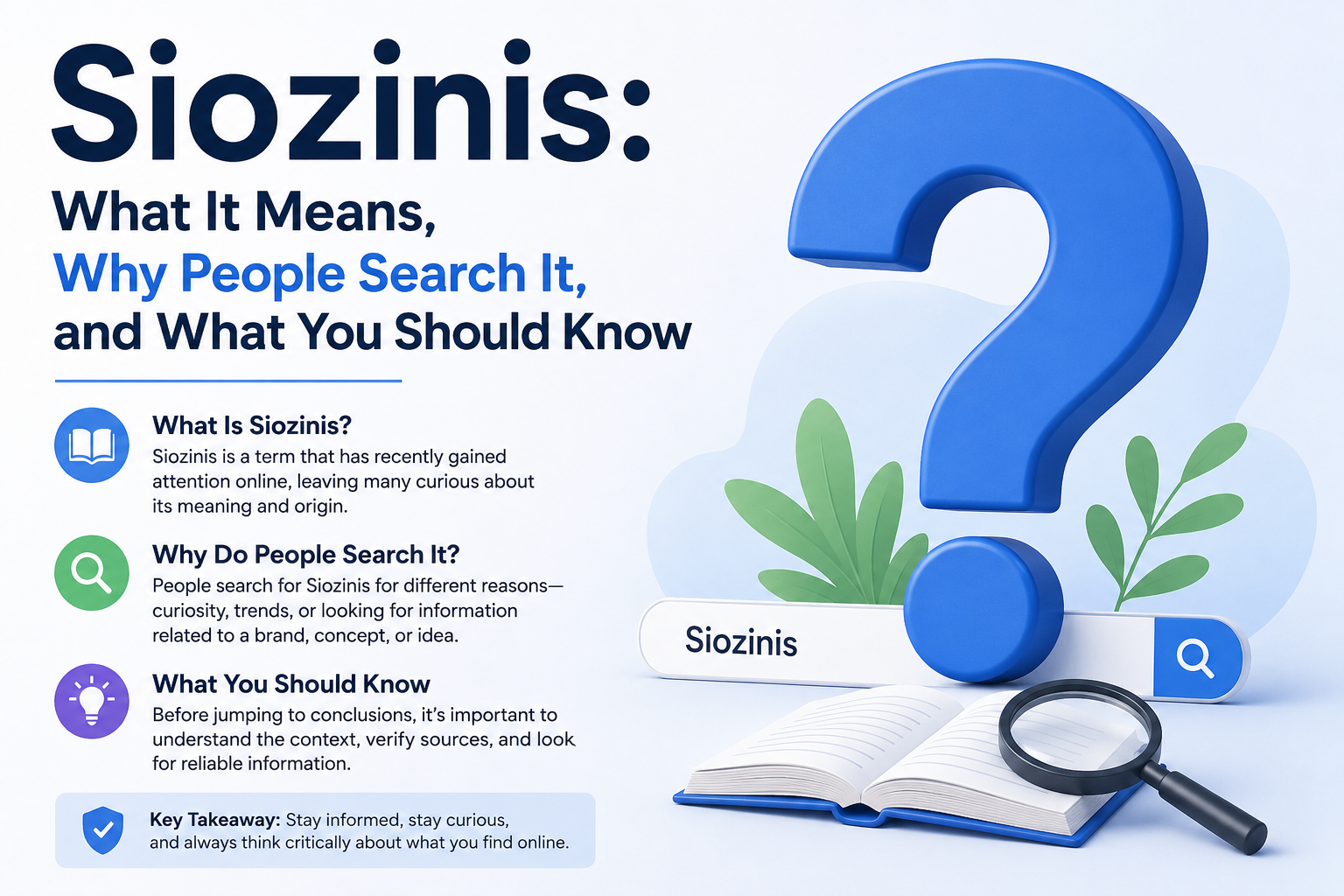
“Siozinis” is one of those unusual terms that appears online without a clear, widely accepted meaning. Most people searching for it are usually trying to figure out one of three things:
- whether it is a real brand, username, or digital platform
- if it relates to a product, app, or online trend
- whether the term is legitimate or potentially suspicious
Right now, there is very little verified public information connected to “siozinis,” which is exactly why so many users end up confused when they encounter it.
The Real Problem
The internet is now full of unfamiliar words that suddenly appear in searches, ads, usernames, random URLs, AI-generated pages, gaming profiles, or social media mentions. Some become real brands later. Others disappear after a few weeks.
“Siozinis” falls into that gray area.
Most users are not searching the word because they already know what it means. They search it because they saw it somewhere unexpectedly and want answers fast.
Common situations include:
- seeing “siozinis” in a website link
- finding the term in search suggestions
- spotting it on social media or forums
- noticing it attached to a product page or profile
- wondering whether it is safe, fake, or autogenerated
That uncertainty creates frustration because many pages online simply repeat the keyword without explaining anything useful.
What “Siozinis” Probably Is
Based on how unusual internet terms typically spread, “siozinis” is likely one of these:
A Randomly Generated Brand-Style Name
Many modern online tools generate unique names automatically for:
- startup concepts
- temporary websites
- test projects
- AI-generated content systems
- username creation
- digital storefronts
“Siozinis” has the structure of a made-up branded word rather than a traditional dictionary term.
That matters because people often assume every searchable term has a deeper meaning when sometimes it was simply created to sound unique.
A Username or Online Identity
Another realistic possibility is that “siozinis” belongs to:
- a gamer tag
- creator handle
- social media account
- forum identity
- NFT or crypto-related profile
- digital alias
Many searches happen after users encounter uncommon usernames repeatedly across platforms.
A Low-Authority or Emerging Website Reference
Sometimes obscure terms begin appearing because small websites or automatically generated pages index them.
This happens frequently with:
- expired domains
- AI-generated blog networks
- low-quality SEO pages
- test environments accidentally indexed by search engines
In these situations, users search the word expecting clarity but mostly find recycled content that explains nothing.
Why People Get Suspicious About Terms Like Siozinis
There is a practical reason people become cautious around unfamiliar words online.
Over the last few years, internet users have become more aware of:
- phishing attempts
- fake shopping stores
- scam links
- cloned websites
- misleading redirects
- autogenerated spam pages
When a strange term suddenly appears without context, people naturally want to verify whether it is trustworthy.
That does not automatically mean “siozinis” is dangerous. It simply means there is currently not enough established information attached to the name.
A smart approach is caution, not panic.
How to Check Whether Siozinis Is Legitimate
If you encountered “siozinis” connected to a website, app, or online profile, here are practical ways to evaluate it.
Check the Domain Age
New domains are not always bad, but extremely recent registrations combined with poor site quality can be a warning sign.
Look for:
- transparent ownership information
- working contact pages
- clear policies
- real company details
If everything feels anonymous or unfinished, be careful.
Search Beyond the Name Itself
A common mistake is searching only the keyword.
Instead, search:
- “siozinis reviews”
- “siozinis scam”
- “siozinis Reddit”
- “siozinis trustpilot”
- “siozinis website”
This gives better context than the standalone term alone.
Look at the Writing Quality
One underrated trust signal is content quality.
Low-trust sites often contain:
- repetitive wording
- broken English
- copied text
- vague product descriptions
- unrealistic promises
Experienced internet users spot this quickly.
Ironically, many suspicious websites now look visually polished, so reading carefully matters more than design alone.
Never Share Sensitive Information Too Quickly
If you discovered “siozinis” through:
- an unexpected email
- social media message
- random advertisement
- popup notification
avoid immediately sharing:
- banking information
- passwords
- phone verification codes
- ID documents
This is basic internet safety, but it is still one of the most important habits people ignore.
Real-World Example of How Terms Like This Spread
A common pattern looks like this:
- A random or autogenerated name appears online.
- Search engines index it.
- Curious users search the term.
- Low-quality websites publish thin content around it.
- Confusion increases because nobody explains the actual context clearly.
This cycle happens constantly now, especially with AI-generated naming systems and automated content publishing.
That is why many obscure keywords suddenly develop search traffic even when they have little verified meaning behind them.
Common Mistakes People Make
Assuming Every Searchable Word Is Important
Not every indexed term represents:
- a major company
- a real movement
- a known product
- a verified platform
Sometimes it is simply digital noise.
Understanding this saves time and prevents unnecessary concern.
Trusting the First Result Immediately
Many obscure keyword searches lead to weak or spam-heavy results.
Users often assume:
“If it ranks in search, it must be credible.”
That is no longer true.
Always compare multiple sources before trusting unfamiliar websites or services.
Ignoring Small Warning Signs
People tend to ignore things like:
- no contact information
- copied branding
- aggressive ads
- fake urgency
- strange redirects
Those details matter more than flashy graphics.
Is Siozinis Dangerous?
There is currently no widely verified evidence proving that “siozinis” itself is dangerous.
But there is also not enough established public information to confidently label it trustworthy.
That middle ground is important.
The safest position is:
- stay curious
- verify carefully
- avoid assumptions
- use normal internet caution
Most unfamiliar terms online are harmless. The problem is that some are connected to low-quality or deceptive ecosystems, which is why verification matters.
Better Ways to Research Unknown Terms Online
If you regularly encounter strange keywords online, use this simple process:
Step 1: Search Multiple Sources
Do not rely on a single page.
Step 2: Check Community Discussions
Forums often reveal more practical truth than polished websites.
Step 3: Verify Business Identity
Legitimate companies usually leave a consistent footprint online.
Step 4: Look for Transparency
Real platforms explain:
- who they are
- what they do
- how users contact them
Step 5: Trust Your Instincts
If something feels rushed, misleading, or oddly vague, pause before interacting further.
FAQ
What does siozinis mean?
There is currently no widely recognized or officially established meaning for “siozinis.” It may be a brand-style invented word, username, project name, or indexed online term.
Is siozinis a real company?
There is no strong public evidence showing that “siozinis” is a major verified company at this time.
Why are people searching for siozinis?
Most people likely search it after seeing the word online and wanting to know whether it is legitimate, useful, or connected to something important.
Is siozinis safe to use?
That depends entirely on where you encountered it. If it is connected to a website or service, evaluate the platform carefully before sharing personal information.
Could siozinis be AI-generated?
Possibly. Many unusual online terms today are automatically generated for branding, usernames, domains, or content systems.
Final Verdict
“Siozinis” is currently best understood as an obscure online term without a clearly established public identity. The keyword attracts attention mainly because people encounter it unexpectedly and cannot immediately determine what it refers to.
The biggest mistake users make with terms like this is assuming there must be a hidden meaning or major platform behind them. In many cases, there is not.
Still, caution is reasonable.
If you encounter “siozinis” tied to a website, product, or service:
- verify before trusting it
- look for transparency
- avoid rushing into signups or payments
- compare multiple sources
- pay attention to credibility signals
That approach works not only for “siozinis,” but for almost every unfamiliar digital term spreading online today.

Leave a Reply