
Quick Answer
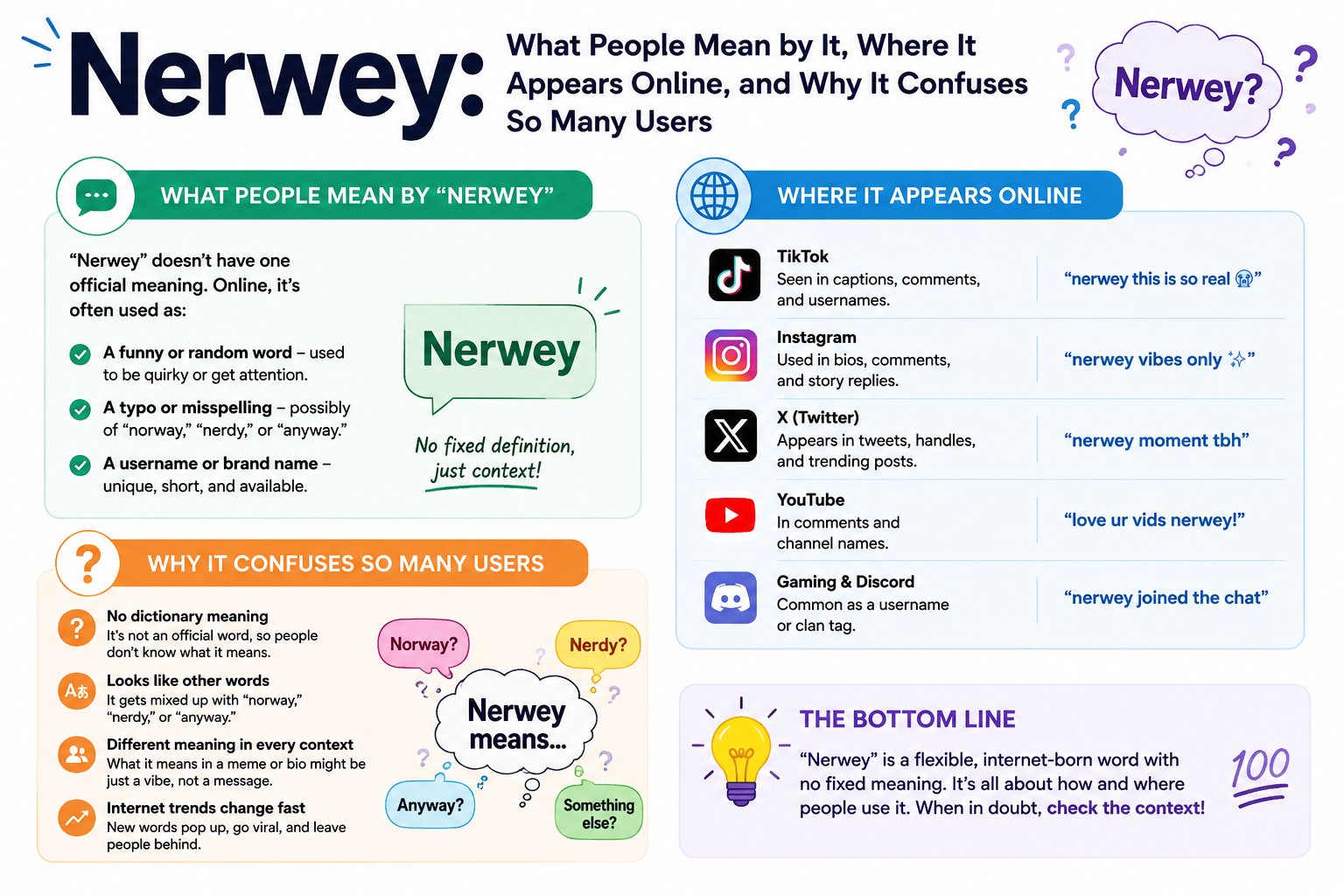
“Nerwey” is not a widely recognized official word, brand, or technical term. In most cases, people searching for “nerwey” are dealing with one of three situations:
- a misspelling of another word or name
- a username, app, website, or online alias
- a newly emerging internet term with limited public information
Because the keyword has very little verified context online, users often struggle to figure out whether it is safe, legitimate, or even real. The smartest approach is to verify where you saw it before downloading anything, creating accounts, or clicking unknown links.
The Real Problem
The biggest issue with terms like “nerwey” is uncertainty.
People usually land on this keyword after seeing it in:
- a search suggestion
- a social media profile
- a random website
- a browser redirect
- a gaming username
- a message or ad
- an app listing
- an AI-generated recommendation
- a typo while searching something else
That creates confusion fast.
Unlike established platforms or brands, “nerwey” does not currently have a strong public identity attached to it. That means users are left guessing:
- Is it a website?
- Is it malware?
- Is it a person?
- Is it a scam?
- Is it just a typo?
Most existing content around obscure keywords either invents explanations or fills pages with vague language. That does not help real users who simply want clarity.
So instead of pretending there is one definitive answer, it is more useful to understand how obscure internet terms like this usually work.
Understanding Why “Nerwey” Appears in Searches
It May Be a Typo
This is the most likely explanation.
People frequently mistype:
- Norway
- Nervy
- Newry
- Nerve
- Network-related terms
- Brand names with similar spelling
Search engines often surface unusual spellings because enough people accidentally search them.
A practical example:
Someone typing quickly on mobile may search “Norwey” or “Nerwey” instead of “Norway.” Once enough users repeat the mistake, the term starts appearing in autocomplete systems.
This happens more often than most people realize.
It Could Be a Username or Online Alias
Many obscure keywords gain traffic because they are used as:
- TikTok usernames
- gaming tags
- Discord identities
- YouTube handles
- Instagram names
- small digital brands
If you encountered “nerwey” on social media, there is a good chance it belongs to an individual creator or small community rather than a formal company.
One important detail many articles miss:
small usernames often appear in search results before they develop any public reputation. That means there may be almost no trustworthy information available yet.
It Might Be Connected to a New or Low-Visibility Website
Sometimes people search unfamiliar terms after:
- getting redirected in a browser
- seeing pop-up ads
- installing unknown apps
- receiving suspicious emails
- noticing strange analytics traffic
In those cases, users are trying to check whether the name is safe.
That concern is reasonable.
A site with little public history should always be treated carefully until verified.
How to Check Whether “Nerwey” Is Safe
Look at the Source First
Where did you see it?
That matters more than the word itself.
Lower-Risk Situations
- a known social platform
- a friend’s recommendation
- a verified app store listing
- a trusted creator profile
Higher-Risk Situations
- spam emails
- browser redirects
- pop-up ads
- suspicious downloads
- fake streaming pages
- unknown APK files
The same keyword can be harmless in one context and risky in another.
Check for Basic Trust Signals
Before interacting with any site or app connected to “nerwey,” look for:
- HTTPS security
- real contact information
- privacy policy pages
- active social presence
- independent reviews
- recent website activity
If none of these exist, be cautious.
One common mistake users make is assuming a professional-looking homepage automatically means legitimacy. Scam pages are often visually polished now.
Avoid Immediate Downloads
This is especially important.
If “nerwey” appears connected to:
- cracked software
- unofficial streaming
- modded games
- unknown browser extensions
- APK files outside official stores
do not install anything immediately.
A lot of malware spreads through obscure branded names that users cannot easily verify.
Why Obscure Keywords Become Popular
There is an interesting pattern behind strange search terms.
Many gain visibility because of:
- viral TikTok mentions
- autocomplete behavior
- AI-generated text online
- gaming communities
- temporary trends
- typo loops in search engines
Once enough people search a mysterious word, curiosity alone drives more traffic.
This creates a cycle:
- Users see the term
- They search it
- Search engines notice activity
- More people become curious
- The term spreads further
That does not necessarily mean the keyword has real importance.
Sometimes it is simply internet momentum.
Real-World Situations Where People Search “Nerwey”
Scenario 1: A Suspicious Redirect
A user clicks a free movie site and suddenly lands on a page mentioning “nerwey.”
What they should do:
- close the page
- avoid downloads
- clear browser tabs
- run a security scan if prompted to install software
Scenario 2: A Social Media Username
Someone sees a creator named “Nerwey” on TikTok or gaming platforms.
In this case, the term may simply be a personal alias with no broader meaning.
Scenario 3: An Accidental Search Typo
A user intends to search for “Norway travel” but types “nerwey.”
Search engines still process the query because typo-based traffic is extremely common.
Common Mistakes People Make
Assuming Every Unknown Word Is Dangerous
Not every obscure keyword is malicious.
Some are:
- tiny startups
- usernames
- niche communities
- unfinished projects
- misspellings
Panic searching often creates more confusion than the term itself.
Trusting Random “Explainer” Websites
Many low-quality websites publish articles about mysterious keywords without verifying anything.
They often:
- invent fake histories
- exaggerate risks
- copy each other
- use misleading claims
If an article makes dramatic statements without evidence, treat it carefully.
Downloading Before Researching
This is still the biggest risk.
Curiosity causes users to install things too quickly.
If you cannot clearly identify:
- the developer
- the source
- the purpose
- the permissions requested
then stop and verify first.
Better Alternatives When You Cannot Verify a Term
If you are unsure about “nerwey,” use safer verification methods instead of guessing.
Use Trusted Search Sources
Check:
- official app stores
- reputable tech forums
- verified social profiles
- cybersecurity communities
Scan Links Before Opening
Online URL scanners can help identify:
- phishing attempts
- malware risks
- suspicious redirects
Search With Context
Instead of searching only:
“nerwey”
search:
- “nerwey app”
- “nerwey website”
- “nerwey scam”
- “nerwey TikTok”
- “nerwey redirect”
Context produces much more accurate results.
Actionable Solution
If you encountered “nerwey” and are unsure what it is, follow this simple process:
- Identify where you saw it
- Avoid instant downloads
- Check whether it has verified ownership
- Look for independent mentions
- Search with context-specific terms
- Use caution if the source feels suspicious
- Ignore hype or fear-based claims without evidence
Most importantly:
do not assume mystery equals legitimacy.
The internet is full of obscure terms that gain attention without offering real value.
FAQ
Is Nerwey a real website?
Possibly, but there is currently no major widely recognized platform or service strongly associated with the name. Context matters.
Is Nerwey a scam?
There is no confirmed universal answer. Some users may encounter the term harmlessly, while others may see it connected to suspicious redirects or low-trust pages. Always verify the source.
Why are people searching for Nerwey?
Usually because:
- they saw the term online
- they encountered it unexpectedly
- they suspect a typo
- they want to know whether it is safe
Curiosity drives many obscure keyword searches.
Is Nerwey connected to malware?
There is no broadly verified evidence tying the term itself to malware. However, unknown websites or downloads associated with obscure names should always be approached carefully.
Could Nerwey just be a typo?
Yes. That is one of the most likely explanations.
Final Verdict
“Nerwey” is one of those internet terms that creates confusion mainly because there is very little verified information attached to it.
For most users, the keyword is probably:
- a typo,
- a small online alias,
- or a low-visibility digital reference.
The important thing is not the word itself — it is the context in which you found it.
If it appeared through suspicious ads, redirects, or downloads, stay cautious. If it came from a harmless social profile or accidental search, it is probably nothing serious.
The smartest response is simple:
verify first, click later.


Leave a Reply