
Quick Answer
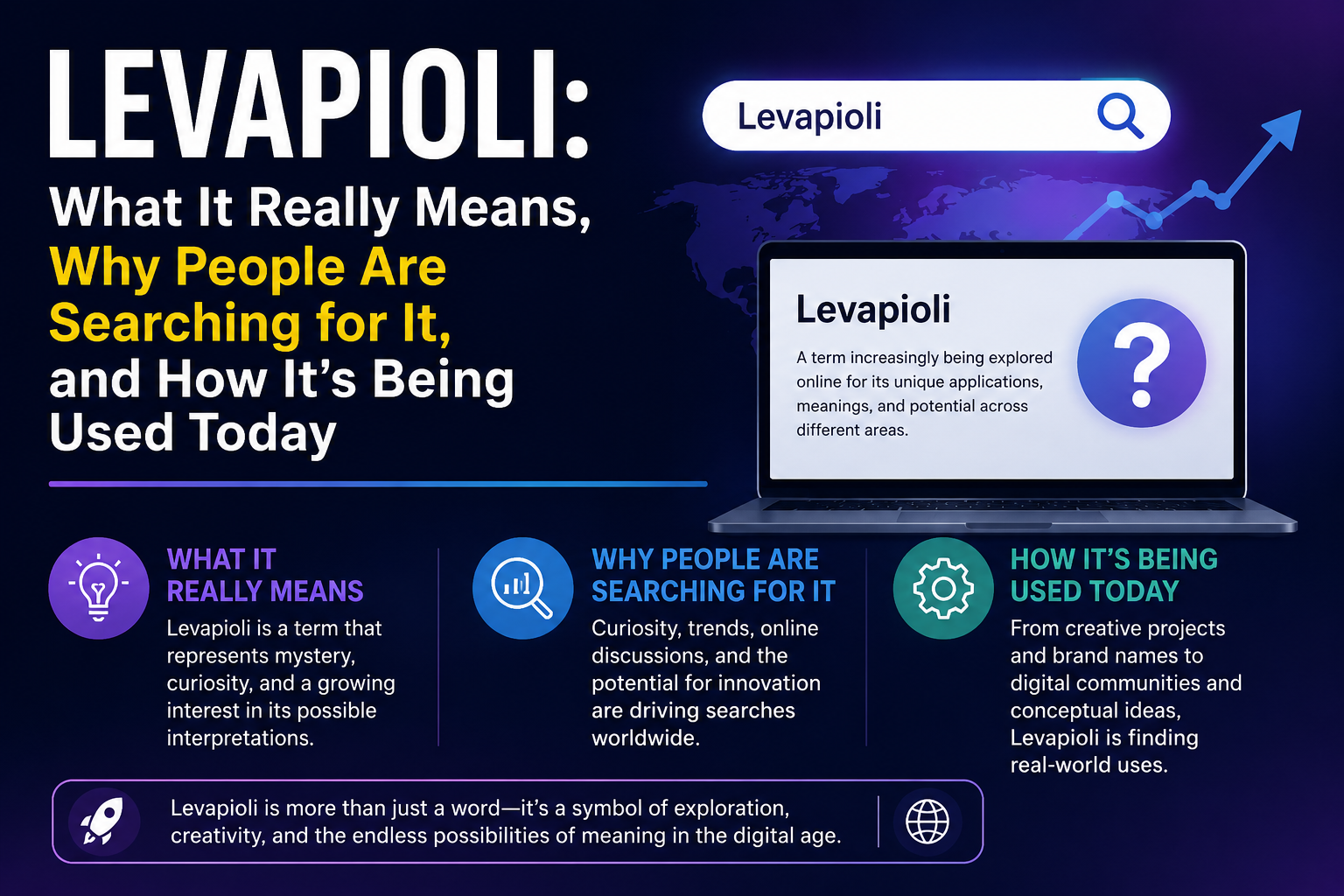
“Levapioli” is an emerging internet term with no single official definition. Depending on the context, people use it to describe:
- a design philosophy centered around adaptability and movement,
- a precision mechanical concept linked to adjustable tools or structures,
- a modern branding or digital identity term,
- or even a cultural food reference in some online discussions.
What makes levapioli interesting is not just the word itself, but why it keeps appearing across design blogs, creative communities, branding discussions, and niche online forums. Most people searching for “levapioli” are trying to figure out one thing:
“Is this a real concept, a brand, a trend, or just an internet-created term?”
The answer is: it’s evolving into all of those at once.
The Real Problem
Most articles about levapioli repeat the same vague explanations without actually helping readers understand why the term matters or why it keeps spreading online.
Some describe it as an engineering mechanism.
Others call it a design mindset.
A few treat it like a branding invention.
And some websites use it so loosely that the meaning becomes almost useless.
That confusion is exactly why interest around the keyword keeps growing.
People are not only searching for a definition. They are trying to understand:
- whether levapioli is legitimate,
- where the term came from,
- how it is being used in real-world contexts,
- and whether it represents a larger trend in design, branding, or digital culture.
This article focuses on the practical meaning behind the term instead of repeating generic descriptions.
What Is Levapioli Actually?
The most consistent interpretation of levapioli connects it to adaptability, transformation, and functional movement.
Several emerging sources trace the word to Italian-style linguistic roots:
- “Leva” meaning lever or lift
- “Pioli” meaning pegs or supports
Together, the idea loosely points toward systems or structures that adjust, pivot, or transform based on need.
That sounds abstract at first, but in practice, the concept is surprisingly easy to understand.
Think about:
- foldable furniture,
- modular workspaces,
- adjustable tools,
- expandable digital systems,
- adaptive branding,
- or products designed to serve multiple functions.
All of these reflect what many people now describe as “levapioli thinking.”
Instead of creating something rigid and static, the idea is to create something flexible, responsive, and multifunctional.
That’s the core pattern behind nearly every modern use of the term.
Why the Word Is Getting Attention Online
The internet has changed how language evolves.
A decade ago, a word usually became popular through dictionaries, books, or formal industries. Today, words spread through:
- niche forums,
- startup culture,
- branding communities,
- social media,
- design blogs,
- gaming culture,
- and digital aesthetics.
Levapioli fits perfectly into that environment because it sounds distinctive, memorable, and open-ended.
That flexibility gives people room to shape the meaning themselves.
In branding, that is extremely valuable.
Many modern startups intentionally choose invented or semi-invented names because:
- domains are easier to secure,
- trademarks are easier to register,
- and the name carries no old associations.
That’s one reason levapioli keeps appearing in conversations around creative branding and digital identity.
The Most Practical Way to Understand Levapioli
The easiest way to understand levapioli is this:
It represents systems designed to adapt instead of staying fixed.
That applies across multiple industries.
In Product Design
A levapioli-style product is usually:
- modular,
- transformable,
- space-efficient,
- or multi-purpose.
Examples:
- foldable desks,
- convertible bags,
- retractable shelving,
- adjustable lighting systems,
- compact urban furniture.
Modern consumers increasingly prefer products that solve multiple problems without taking extra space.
That trend alone explains why adaptability-focused terminology keeps growing.
In Digital Branding
In branding and online culture, levapioli often represents:
- flexibility,
- reinvention,
- scalable identity,
- or creative transformation.
A strong example is how modern brands constantly evolve:
- logos shift,
- interfaces adapt,
- user experiences personalize in real time,
- and platforms continuously redesign themselves.
Static identity no longer works well online.
Brands now survive by adapting quickly.
That mindset aligns closely with how the term is being used in creative communities.
In Mechanical or Industrial Contexts
Some articles describe levapioli as a precision lifting or adjustment mechanism used in technical settings.
Whether the term has formal industrial recognition is still unclear, but the broader idea makes sense:
- controlled movement,
- precise adjustment,
- and adaptable mechanics.
Even if the terminology itself is evolving informally online, the underlying concept is real and widely used across engineering and industrial design.
Real-World Examples That Reflect Levapioli Thinking
Small Apartment Furniture
Modern city living forced furniture companies to rethink design.
A sofa that becomes a bed.
A table that folds into a wall.
Storage hidden inside seating.
These are not gimmicks anymore.
They are practical responses to changing lifestyles.
That is levapioli in action: adaptability as a core feature, not an afterthought.
Modular Tech Ecosystems
Many successful tech products now prioritize modular systems:
- customizable dashboards,
- expandable software architecture,
- interchangeable hardware accessories.
Users want systems that evolve with them instead of becoming obsolete quickly.
This shift toward adaptability mirrors the same philosophy behind levapioli discussions online.
Personal Branding
Another interesting modern use is metaphorical.
Some creators use “levapioli” to describe career reinvention or flexible thinking.
For example:
- freelancers shifting industries,
- creators building multiple income streams,
- professionals adapting to AI-driven work changes,
- entrepreneurs pivoting business models.
The term increasingly symbolizes resilience and controlled transformation.
That broader cultural meaning is one reason the keyword continues gaining curiosity online.
Common Mistakes People Make When Understanding Levapioli
Assuming It Has One Official Definition
It doesn’t.
Levapioli is still an evolving term.
Trying to force one strict definition misses the point.
The meaning changes depending on the context.
Treating It Like a Traditional Dictionary Word
This is where many articles become misleading.
Levapioli behaves more like an internet-native conceptual term than a historically standardized word.
That does not make it fake.
It simply means the language around it is still developing.
Thinking It’s Only About Design
Design is only one part of the conversation.
The broader appeal comes from what the word represents:
- adaptability,
- reinvention,
- modular thinking,
- and functional flexibility.
That’s why it appears across industries.
Is Levapioli a Real Trend or Just Online Noise?
Right now, it sits somewhere in the middle.
The term itself is still niche.
But the ideas connected to it are absolutely real and growing fast.
The world is moving toward:
- adaptable products,
- flexible work,
- modular systems,
- scalable branding,
- and personalized experiences.
Levapioli essentially acts as a label for that broader movement.
Even if the word changes over time, the underlying philosophy is likely here to stay.
Better Alternatives to the Term “Levapioli”
Depending on the context, some clearer alternatives include:
- adaptive design,
- modular systems,
- transformable structures,
- flexible architecture,
- responsive branding,
- multifunctional engineering.
However, levapioli has one advantage these terms do not:
it feels distinctive and emotionally memorable.
That matters in digital culture.
People remember unusual words.
Actionable Ways to Apply Levapioli Thinking
For Designers
Ask:
“How can this product serve multiple functions without becoming complicated?”
The best adaptive designs feel simple, not overloaded.
For Business Owners
Build systems that can evolve:
- scalable websites,
- flexible workflows,
- adaptable branding,
- reusable content structures.
Businesses that cannot pivot usually struggle long term.
For Creators
Avoid building an identity around one platform or one trend.
Modern digital success increasingly depends on adaptability.
That is probably the most practical real-world interpretation of levapioli today.
FAQ
Is levapioli a real word?
It appears to be an emerging or internet-evolved term rather than a formally standardized dictionary word.
What does levapioli mean?
Most commonly, it refers to adaptability, modular thinking, movement, transformation, or flexible design systems.
Is levapioli related to engineering?
In some contexts, yes. Certain articles associate it with adjustable mechanical systems or precision tools.
Why is levapioli becoming popular?
Because it connects with modern trends:
- flexible design,
- adaptive branding,
- modular systems,
- and digital identity culture.
Is levapioli a brand?
Not officially, though the word has strong branding potential and is increasingly used in creative digital spaces.
Final Verdict
Levapioli matters less as a strict definition and more as a reflection of where modern culture is heading.
People want:
- products that adapt,
- systems that evolve,
- brands that feel flexible,
- and identities that can shift with changing technology and lifestyles.
That is why this unusual term keeps resurfacing online.
The smartest way to understand levapioli is not as a single object or industry term, but as a modern idea centered around intelligent adaptability.
And in a world changing as quickly as ours, adaptability is no longer optional. It is becoming the default expectation.



Leave a Reply