
Quick Answer
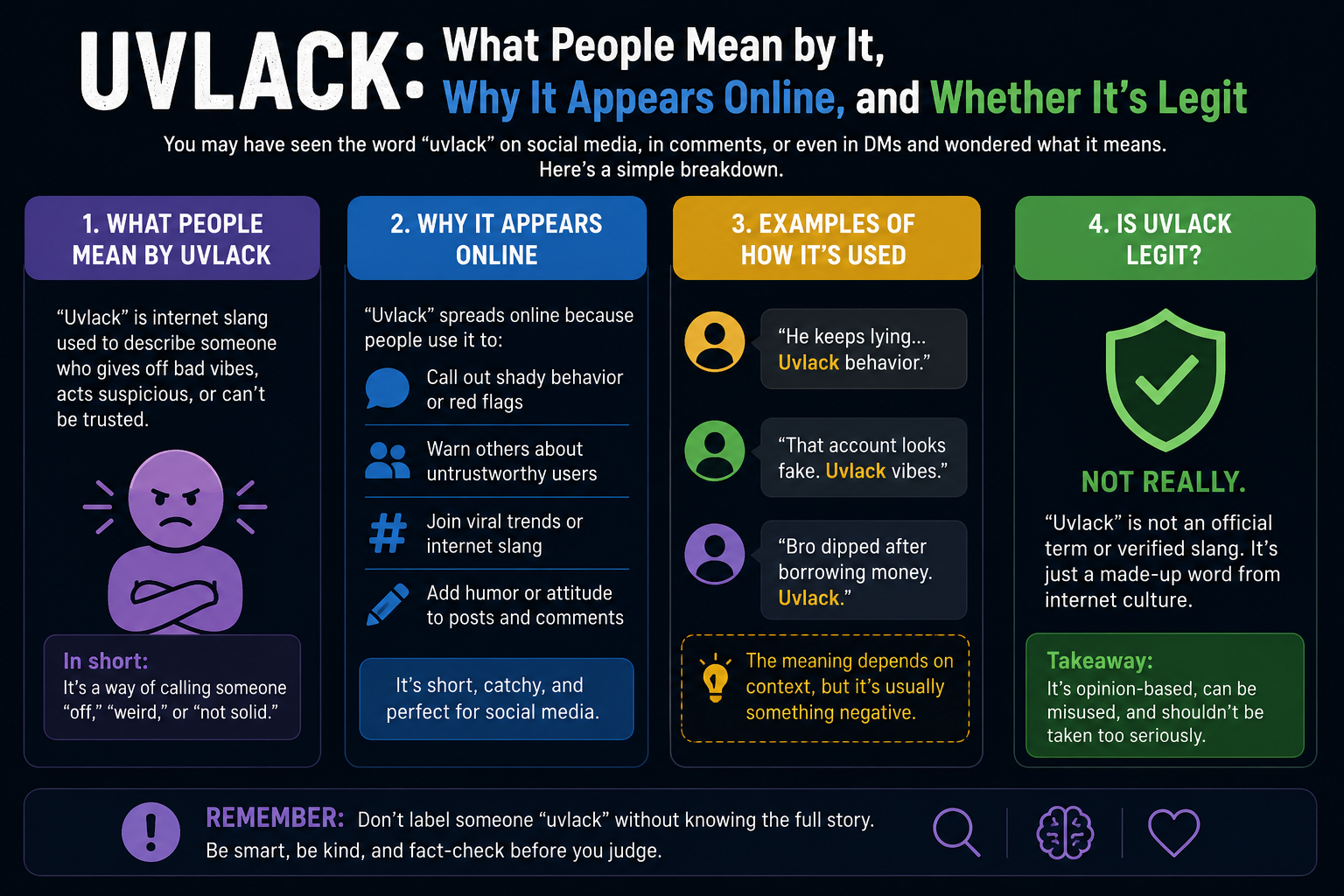
“Uvlack” is not a widely recognized brand, software platform, or official online service. Most people searching for “uvlack” are usually trying to figure out one of three things:
- whether it is a real website or tool
- whether the name is a typo or misspelling
- whether it is connected to suspicious online activity
Right now, there is very little trustworthy public information connected to the term. That uncertainty is exactly why people keep searching for it.
The Real Problem
The internet is now full of random-looking words that suddenly appear in:
- browser search suggestions
- spam links
- strange domains
- social media comments
- temporary apps
- AI-generated pages
- scam messages
- low-quality websites
“Uvlack” fits the pattern of a keyword that confuses users because it lacks clear identity or trusted context.
Most people do not search terms like this out of curiosity alone. They search because something unexpected happened:
- they saw the word in a URL
- a popup mentioned it
- a download included it
- a friend sent a strange link
- they found it in analytics or browser history
- search engines showed it automatically
That creates uncertainty, and uncertainty online usually raises a simple question:
“Is this safe or suspicious?”
What “Uvlack” Might Actually Be
There are several realistic possibilities.
A Misspelled or Auto-Generated Term
This is the most likely explanation.
Many strange keywords online are produced by:
- typing mistakes
- AI-generated spam pages
- automated domain generation
- low-quality SEO experiments
- random usernames
- fake app names
For example, someone may have intended to type:
- “UV lock”
- “UVL”
- “Slack”
- another brand entirely
Search engines sometimes index these accidental combinations, which then causes more people to search them later.
This creates a cycle where a meaningless term begins appearing “popular” even though almost nobody understands it.
A Suspicious Website or Redirect
Another possibility is that “uvlack” appeared as part of:
- a redirect URL
- browser adware
- fake streaming sites
- spam advertisements
- phishing pages
This happens often with newly created domains using unusual names.
A common pattern looks like this:
- User clicks a random link
- Browser redirects through several strange domains
- One of those domains contains a confusing word like “uvlack”
- User searches the name afterward to check whether it is dangerous
That behavior is extremely common today.
A Temporary Online Project or Small Brand
Sometimes these unusual terms belong to:
- tiny startups
- unfinished apps
- gaming usernames
- NFT projects
- experimental tools
- private communities
The problem is that many of these projects disappear quickly or never build enough trust to become recognizable.
When users cannot find:
- an official website
- company details
- real reviews
- social presence
- contact information
they naturally become cautious.
Why People Search Strange Terms Like “Uvlack”
There is an important internet behavior trend behind searches like this.
People increasingly search random words because they are trying to verify safety before interacting with something online.
Years ago, users clicked first and worried later.
Now people search first.
That is actually a smart habit.
When users search strange keywords, they are often checking for:
- malware warnings
- scam reports
- Reddit discussions
- browser safety issues
- trust signals
- real user experiences
If almost no credible information exists, that itself becomes useful information.
Signs That a Term or Website Might Be Risky
If you encountered “uvlack” connected to a website or download, check for these warning signs.
Poor Website Quality
Suspicious sites often have:
- broken English
- copied content
- excessive ads
- fake download buttons
- no company information
- no privacy policy
- strange redirects
Low effort design alone is not proof of danger, but it is a signal worth noticing.
Fake Urgency
Be cautious if the site says things like:
- “Your device is infected”
- “Update immediately”
- “Claim now”
- “Limited time security warning”
Legitimate companies rarely use panic-based messaging.
Random Downloads
One of the biggest mistakes users make is downloading files tied to unknown names without verification.
If “uvlack” appeared beside:
- a browser extension
- APK file
- desktop installer
- ZIP archive
- media converter
do not install it unless you can verify the source.
Real-World Situations Where Users Encounter Terms Like This
Browser Redirects
You try opening a streaming site or free download page and suddenly see unfamiliar domains appearing in the address bar.
This is one of the most common scenarios.
Spam Emails or Messages
Scammers frequently use strange, unique names because:
- they avoid spam filters
- the names sound “new”
- users cannot easily verify them
Analytics or Search Console Data
Website owners sometimes discover weird keywords in:
- search traffic
- referral logs
- spam backlinks
Many of these are automated bot-generated terms.
Mobile App Advertisements
Some low-quality mobile ads use random names to attract clicks before disappearing later.
That is why many obscure keywords briefly trend and then vanish.
Common Mistakes People Make
Assuming Every Unknown Term Is Dangerous
Not every strange keyword is malware or a scam.
Sometimes it is genuinely meaningless noise created by the modern internet ecosystem.
People often overreact when they encounter unfamiliar terms.
The smarter approach is verification, not panic.
Clicking Before Researching
This is still the biggest mistake.
Users frequently:
- install extensions
- allow notifications
- download files
- enter login information
before checking whether the source is trustworthy.
A quick search first can prevent major problems later.
Trusting Fake Reviews
Some suspicious projects create artificial reviews using:
- copied testimonials
- AI-written comments
- fake ratings
- stock profile pictures
Look for real discussions from actual users instead of polished promotional pages.
How to Check Whether Something Like “Uvlack” Is Safe
Search for Independent Mentions
Look beyond the official page.
Useful places include:
- technical forums
- cybersecurity discussions
- community posts
- trusted review platforms
If nobody credible has discussed it, be careful.
Check the Website Age
Many suspicious sites are extremely new.
A domain created only days or weeks ago deserves extra caution, especially if it asks for:
- payment
- downloads
- account access
Avoid Granting Browser Permissions
Never allow notification permissions from unknown sites unless absolutely necessary.
Spam notification abuse has become very common.
Use Security Tools
Basic protections still matter:
- updated browser
- antivirus software
- password manager
- two-factor authentication
These reduce damage even if you accidentally visit a suspicious page.
Is “Uvlack” a Real Company or Trusted Service?
At the moment, there is no strong public evidence showing that “uvlack” is a major trusted platform, recognized software provider, or established online brand.
That does not automatically mean it is malicious.
It simply means there is not enough reliable information to confidently treat it as trustworthy.
That distinction matters.
Many people wrongly assume:
- “unknown” means safe
- or “unknown” means dangerous
In reality, unknown usually just means unverified.
Better Alternatives to Unknown Online T/ools
If you discovered “uvlack” while looking for software, communication apps, browser tools, or downloads, it is usually safer to stick with recognized platforms that have:
- transparent ownership
- active support
- public reviews
- security history
- established communities
Unknown tools are not always harmful, but trusted ecosystems reduce risk significantly.
Actionable Steps if You Already Interacted With It
If you clicked or downloaded something connected to “uvlack,” do these things immediately:
- Run a malware scan
- Clear suspicious browser extensions
- Change passwords if you entered login details
- Review notification permissions
- Check installed apps and downloads
- Monitor unusual account activity
In most cases, nothing serious happens. But quick action is still smart.
FAQ
Is uvlack a virus?
There is no confirmed evidence that “uvlack” itself is a virus. However, if the term appeared through suspicious redirects, downloads, or popups, caution is recommended.
Why does uvlack appear in search results?
It may appear because of:
- automated indexing
- spam pages
- typo searches
- temporary domains
- online bot activity
Search engines often surface unusual keywords when enough users encounter them.
Should I trust a website named uvlack?
Not automatically.
Before trusting any unfamiliar website, verify:
- ownership
- reviews
- reputation
- security indicators
- real user feedback
Can strange keywords be generated automatically?
Yes. Many modern spam systems generate random names and keywords automatically to create traffic or avoid detection.
What should I do if I downloaded something connected to uvlack?
Run a security scan, remove suspicious files or extensions, and change important passwords if you entered any sensitive information.
Final Verdict
“Uvlack” appears to be one of many obscure internet terms that people encounter without clear explanation. In most cases, searches like this are driven by confusion, caution, or curiosity after seeing the word connected to a website, redirect, or unknown platform.
The important thing is not the name itself. The important thing is how you respond to unfamiliar online activity.
A careful user:
- researches first
- avoids random downloads
- checks trust signals
- stays cautious with unknown sites
That approach matters far more than any single strange keyword.
When information is limited, caution and verification are usually the smartest response.
Leave a Reply